
Pressure Vessels
A pressure vessel is an enclosed container designed to hold gases or liquids at a pressure significantly different from the ambient pressure. These vessels are crucial in various industries like oil and gas, chemical processing, and power generation, ensuring safe containment of fluids under pressure.
The pressure vessel are built in accordance to ASME Boiler and Pressure Vessel Code (BPVC) that provides rules for the design, materials, fabrication, inspection, testing, and certification of pressure vessels. The code ensures the safe construction and operation of these vessels, which are crucial in various industries
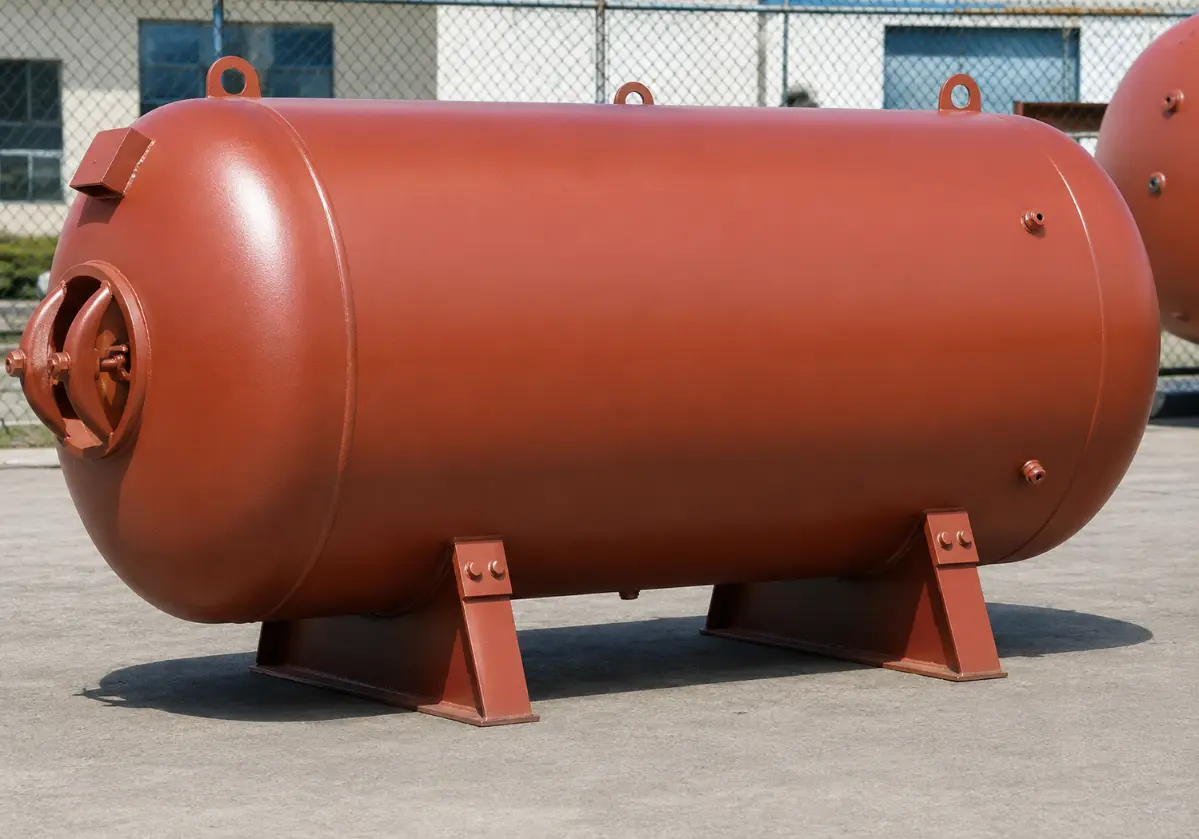
Key aspects of pressure vessels:
Purpose
To safely store or process fluids (liquids or gases) under pressure.
Design Considerations
Pressure vessels are designed with specific geometries (cylindrical, spherical, etc.) and materials to withstand the internal pressure and temperature, adhering to strict regulations and codes as per ASME BPVC.
Applications
They are used in a wide range of applications, including reactors, heat exchangers, separators, and storage tanks.
Safety
Due to the potential hazards associated with high pressure, pressure vessel design, fabrication, and operation are governed by stringent rules and regulations as per ASME BPVC.
READY TO GET STARTED
Need Reliable Flow Measurement & Calibration Solutions?
Partner with Rockwin for advanced flowmeters, custom engineered packaged systems, and NABL accredited calibration services designed to meet your industry requirements.