CNG Decompression Skid
A CNG decompression skid is a system designed to reduce the high pressure of compressed natural gas (CNG) to a lower, usable pressure for various applications. This is essential for applications where high-pressure gas needs to be safely delivered to equipment or pipelines designed for lower pressures.
They ensure the safe and efficient delivery of natural gas by regulating pressure and flow, often including features like heat transfer, and safety mechanisms.
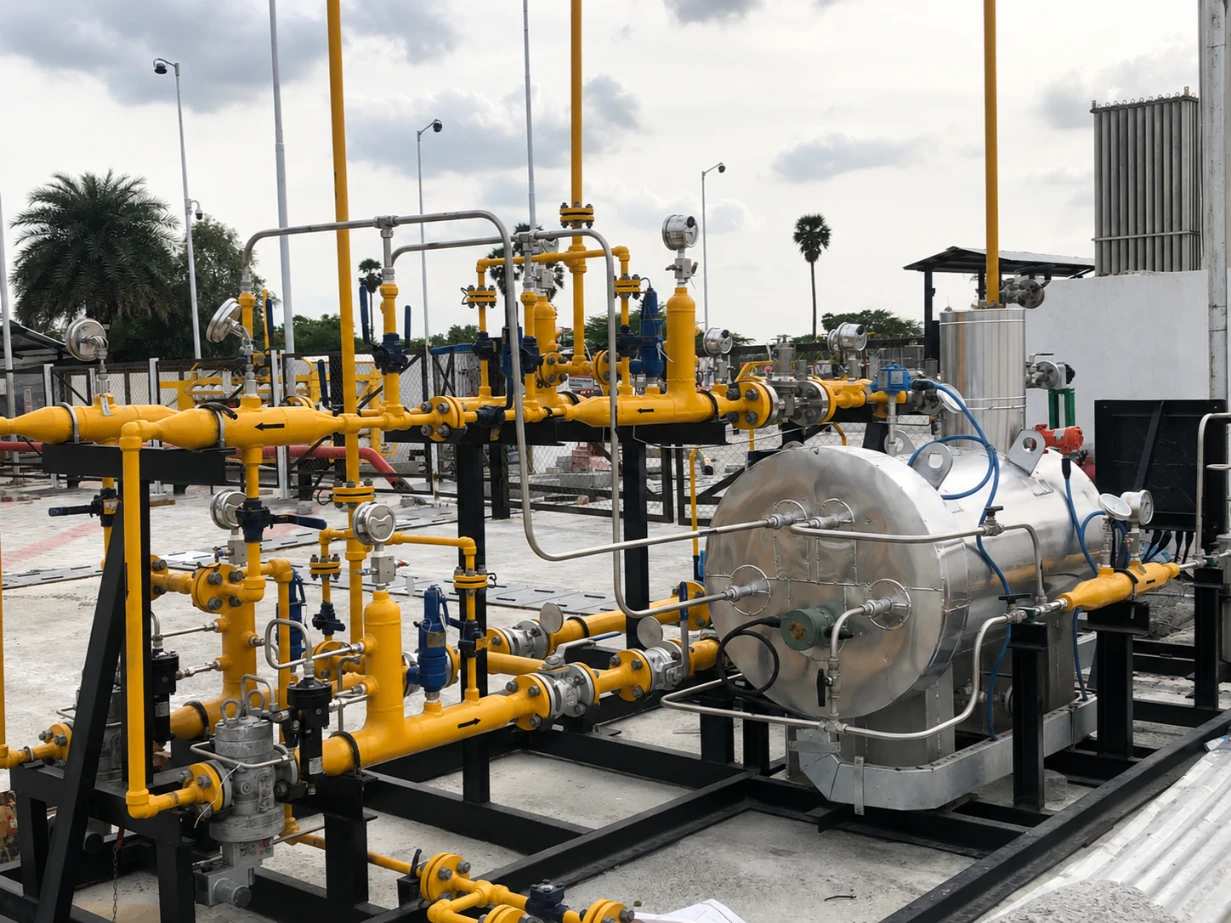
Key Components and Functions:
Pressure Regulation
The skid uses a series of pressure regulators to step down the high-pressure CNG (typically from 200-250 bar) to a lower, more manageable pressure (e.g., 3-5 bar) suitable for downstream equipment.
Flow Measurement
CNG decompression skids often include flow meters to accurately measure the amount of gas being used.
Heat Transfer
To prevent icing due to the Joule-Thompson effect (pressure drop leading to temperature drop), skids may include heaters, either electric or gas-fired, or heat exchangers.
Safety Features
Safety valves, relief valves, and other safety devices are included to protect against overpressure and ensure safe operation.
Instrumentation and Control
Skids are equipped with instrumentation and control systems to monitor and manage the decompression process.
READY TO GET STARTED
Need Reliable Flow Measurement & Calibration Solutions?
Partner with Rockwin for advanced flowmeters, custom engineered packaged systems, and NABL accredited calibration services designed to meet your industry requirements.